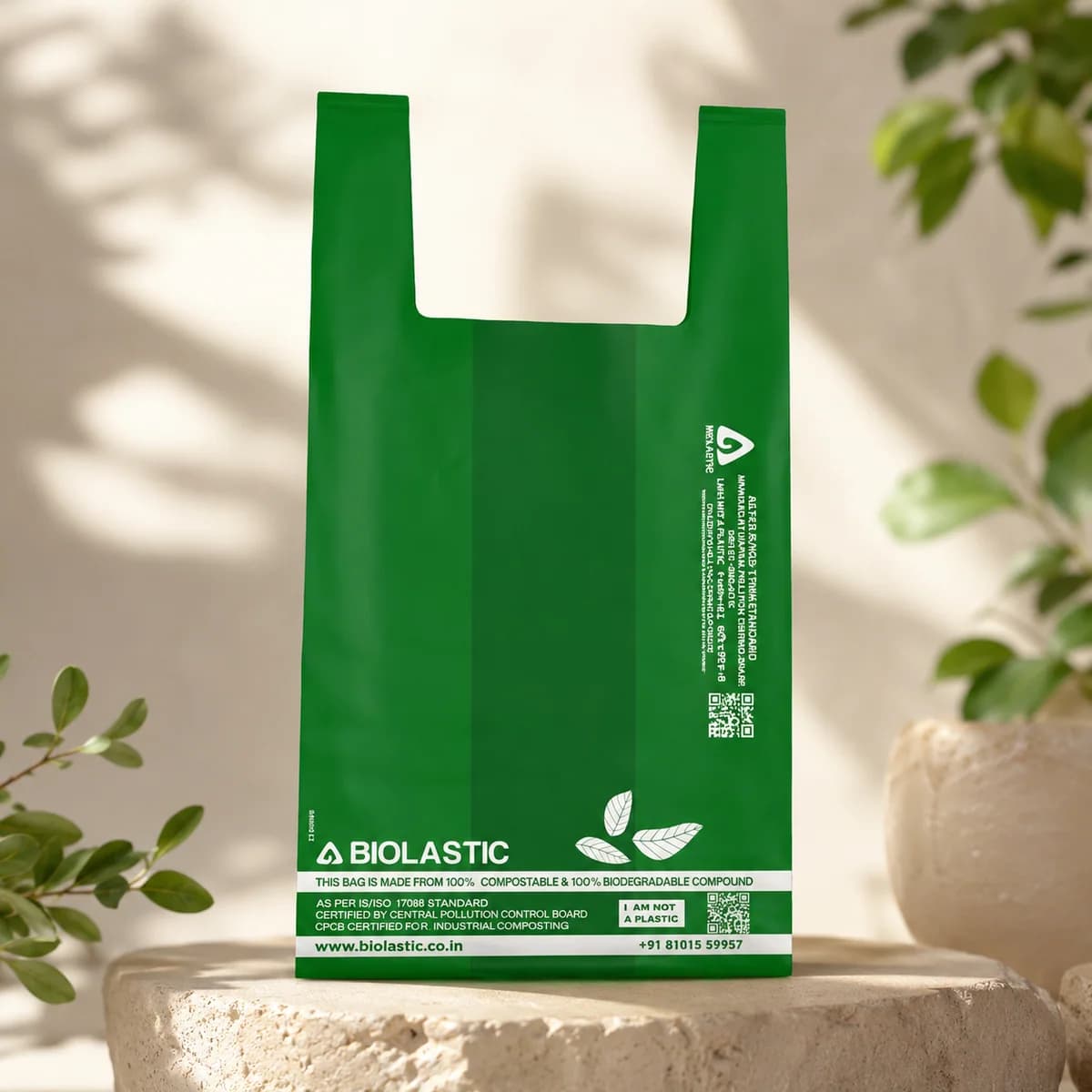
Compostable Spice Packaging Pouches: Sealing, Moisture Barrier & Wholesale Buying Guide
A spice brand can spend months perfecting a chilli blend and lose the customer in a few weeks if its pouch lets moisture in, opens at the seal or transfers an unwanted odour. That is why the right packaging question is not simply, “Is this pouch compostable?” It is, “Can this particular pouch protect my particular product, on my packing line, for the shelf life I need?”
The short answer: Compostable flexible pouches can be worth evaluating for spices, dry groceries and similar goods, but do not approve them on appearance or a compostability claim alone. First confirm food-contact suitability, then measure moisture and oxygen barrier performance, establish a reliable heat-sealing window, and run a real filled-pack trial. Compare the cost of accepted packs, not only the quoted price per kilogram.
This guide is for spice manufacturers, seasoning brands, dry-food packers, contract packers, private-label businesses and packaging wholesalers worldwide. It also serves buyers in Siliguri, Darjeeling, Jalpaiguri, North Bengal, Sikkim, Assam and the wider Indian market who need practical specifications for wholesale enquiries.
1. Start with the product, not the pouch
“Spices” is not one packaging application. Whole cumin, ground turmeric, chilli powder, peppercorns and an oily seasoning mix behave differently. A dry whole spice may create sharp contact points. A fine powder can contaminate the seal area. A strongly aromatic blend may require more protection against flavour loss or outside odours. A moisture-sensitive product may cake long before its printed best-before date.
Write down these details before contacting suppliers:
- Product and form: whole, cracked, powdered or blended; note oily or highly aromatic ingredients.
- Net fill weight: the weight you intend to sell, not the supplier's generic “up to” capacity.
- Filling method: manual, auger, volumetric or another system; note dust generation.
- Shelf-life target: define the storage period you need to validate rather than assuming a pouch can deliver it.
- Distribution route: local shops, humid warehouses, long-distance road transport or cross-border shipment.
- Contact arrangement: direct food contact, or an outer pouch around a separately approved inner pack.
- End-of-life plan: which local collection or composting system can actually accept the finished pack.
The most expensive packaging mistake often starts with an incomplete specification. A supplier can quote a pouch size, but cannot responsibly guarantee shelf life from the dimensions alone.
2. Which Biolastic pouch formats can buyers enquire about?
Biolastic's live catalogue lists bio-based compostable packaging pouches in several nominal sizes. Examples include 3 × 6 inch compostable pouches, 4.5 × 11 inch compostable pouches and 8 × 13 inch compostable pouches.
The listings describe custom micron options and potential custom colours, dimensions and printing, subject to feasibility and quotation. They also contain indicative carrying capacities and piece counts. Treat those figures as catalogue estimates, not a guarantee that every spice density, pouch construction or sealing allowance will achieve the same fill weight.
| Catalogue format | A sensible first use to evaluate | What must be confirmed before buying |
|---|---|---|
| 3 × 6 inch | Small sample, trial or compact dry-goods portion | Usable internal width, seal margin, filling opening and actual gram fill |
| 4.5 × 11 inch | Narrow or taller pack configuration | Whether the pack stands, folds, seals and fits the carton as required |
| 8 × 13 inch | Larger dry-goods portion or secondary packing | Filled dimensions, weight-bearing performance, seam construction and shipping fit |
| Custom dimensions | Existing pack redesign or automated filling line | Drawing, film structure, thickness tolerance, print position, MOQ and production feasibility |
Important distinction: These are product listings for compostable packaging pouches. They are not proof that a particular grade is already cleared for direct contact with every spice or that it meets a defined shelf-life target. The 3 × 6 inch listing itself advises buyers to confirm direct-food-contact suitability for the exact application.
For 5 kg, 10 kg and 25 kg bulk spice applications, Biolastic also lists a separate compostable spice and masala liner bag. A bulk inner liner and a small retail pouch solve different packaging problems; do not treat their test data as interchangeable.
3. What makes a good spice pouch?
A practical buying decision has five gates.
| Gate | What to ask | Why it matters |
|---|---|---|
| Food-contact | Is the exact finished material documented for the food, time, temperature and destination market? | A compostability document does not replace food-contact compliance |
| Barrier | What are the measured WVTR and, if needed, OTR under stated conditions? | Moisture or oxygen ingress can damage product quality |
| Seal | Does the actual filled pack seal consistently on the intended equipment? | Powder in the seal or poor process control can cause leaks |
| Handling | Can the pack withstand filling, carton loading and distribution? | A strong laboratory film can still fail at a fold or seam |
| End of life | What composting conditions and local collection route apply? | “Compostable” does not mean it will disappear in any environment |
Do not approve a pouch because it passes four out of five gates. If the fifth gate is essential for your product or legal market, the trial is incomplete.
4. Moisture barrier: ask for WVTR, not “waterproof”
For many dry spices, moisture management is a critical packaging question. Water-vapour transmission rate, or WVTR, describes how much water vapour passes through a defined area of material over time under specified test conditions. It is not the same as a simple splash test.
The ASTM F1249 method is used for measuring WVTR of flexible barrier materials. A meaningful supplier report should identify the tested film construction, specimen thickness, test temperature, humidity conditions, units, method edition and date. A number without conditions is difficult to compare fairly.
A worked barrier calculation — illustrative only
Suppose a hypothetical pouch has 0.035 m² of effective exposed film area and a tested WVTR of 5 g/m²/day under the laboratory's stated conditions. The simple steady-state calculation is:
5 × 0.035 = 0.175 g of water vapour per day through the film area.
Over 30 days that would be 5.25 g if the same gradient and material behaviour persisted. This is not a prediction of water absorbed by the food or the actual shelf life: real humidity gradients change, seals contribute, packs deform, and the product itself interacts with moisture. The example only shows why area and test conditions matter.
Never use that hypothetical WVTR as a Biolastic specification. Request a test report for the exact proposed grade and validate the finished pouch with your own spice.
What about oxygen and aroma?
Oxygen can matter for some spice products because it may contribute to quality changes in oxygen-sensitive ingredients. If your product needs an oxygen barrier, request an oxygen transmission rate (OTR) test under specified conditions. A low WVTR does not automatically prove a low OTR, and neither metric alone guarantees aroma retention.
Aromatic products may also need a real storage trial that checks flavour, odour, caking, colour and sensory acceptability. A generic “high-barrier” description is not a substitute for data.
5. Heat sealing: the factory trial that prevents returns
A pouch may look perfectly sealed until it is squeezed into a carton. A spice powder can sit between the seal faces, reducing effective contact. Film structure, thickness, equipment design, jaw condition, pressure, dwell time and cooling all influence the result.
There is no responsible universal heat-sealing temperature for every compostable pouch. Do not copy the settings from a conventional PE pouch and assume they will work.
Use a documented process:
1. Check the material and machine: identify the exact film grade, seal layer, thickness and type of sealer.
2. Start with clean test strips: find a preliminary temperature–pressure–dwell window using supplier guidance and equipment instructions.
3. Test real filled packs: include powder dust and the actual fill height, while keeping the seal zone as clean as your production process allows.
4. Evaluate seal strength: a relevant laboratory method is ASTM F88/F88M-23, which measures seal strength of flexible barrier materials.
5. Check for leaks and weak points: inspect corners, folds, seal intersections and the final cut edge; use a suitable integrity method for the package design.
6. Repeat at production speed: a seal that passes on a benchtop sample may behave differently after continuous operation and stacking.
7. Record the approved window: document settings, sample size, failure modes, batch identification and operator checks.
Seal strength is not the same as a leak-free package. A strong seal can still have a channel or an unsealed corner. Set acceptance criteria for both mechanical strength and integrity.
Quick troubleshooting table
| Symptom | Possible cause to investigate | Practical next check |
|---|---|---|
| Powder leaks from the top seam | Product dust, uneven jaw contact or incomplete sealing | Clean seal zone; inspect jaw parallelism and trial controlled settings |
| Film sticks to the jaw | Incompatible settings or surface construction | Review film specification, jaw surface and supplier's sealing guidance |
| Seals open after cooling | Insufficient bond, handling stress or poor cooling | Test after full cooling and repeat under expected carton load |
| Pouch wrinkles near seam | Web tracking, tension or local heat distortion | Check alignment, tension and the approved seal window |
| Intermittent failures | Gauge variation, contamination or process drift | Record batch, line speed and rejection pattern |
Do not solve a persistent sealing problem simply by increasing temperature without testing. Overheating can damage some films and may create a different failure.
6. Size, thickness and actual usable capacity
A nominal pouch dimension is a starting point, not the final internal volume. The amount that fits depends on product bulk density, pouch shape, seam allowance, headspace, fill method and how the filled pouch must close.
For example, two products sold as “250 g” can occupy very different volumes. Ground chilli and whole cardamom will not pack in the same way. A slim pouch may have enough theoretical area but too little opening for a filling funnel.
For every shortlisted size, run this small test:
- Fill at least several representative samples with the actual product and your normal equipment.
- Leave the proposed seal margin and headspace.
- Weigh each filled pack and record variation.
- Check whether the package fits the display shelf, carton and label artwork.
- Store and handle samples in the expected orientation.
- Repeat with the final film thickness and printing configuration, not only a convenient prototype.
If the pack will be sold by weight, comply with the applicable net-quantity and labelling rules in the destination market. The supplier's “up to 500 g” description is not a legal declaration of your product's net weight.
7. Compostability and food safety are separate approvals
The term compostable describes a potential end-of-life pathway under defined conditions. It does not, by itself, describe migration into food, moisture resistance, heat-seal performance or shelf life.
ISO 17088:2021 covers requirements for plastics suitable for organic recycling, including disintegration, biodegradation, constituents and effects on compost. Its scope relates to managed industrial composting. It does not establish home compostability, marine biodegradation or harmless littering.
Biolastic's pouch catalogue displays CPCB/ISO 17088-related certification language. Before relying on that claim for your own packaging artwork, request the applicable current certificate, scope, product coverage and test documents for the grade being purchased. This article does not independently certify a particular pouch or grant permission to use a certification mark.
The practical questions are: Does the finished printed pouch, including inks, adhesives, closures and any added layers, fall within the relevant claimed scope? Is the claim appropriate for the destination market? Can the pack actually enter a suitable collection and composting system?
Do not claim “home compostable,” “plastic-free,” “100% biodegradable everywhere” or “food safe” without specific evidence. “Bio-based” and “compostable” are also not interchangeable terms.
8. Food-contact rules for India, the EU and the US
India: check the finished packaging against FSSAI requirements
India's Food Safety and Standards (Packaging) Regulations, 2018, as presented in FSSAI's 2 April 2025 compendium, require packaging in direct contact with food to be of food-grade quality and suitable for the product, filling/sealing equipment and transportation conditions. They address material compatibility, migration and documentation, including a certificate of conformity from a NABL-accredited laboratory for relevant direct-food-contact packaging.
The rules also state that printed surfaces should not directly contact food. Verify the current consolidated requirements and subsequent amendments with your compliance adviser before commercial launch.
European Union: assess the actual composition and intended use
The European Commission's food-contact legislation page identifies Regulation (EC) No 1935/2004 as the general framework and Regulation (EC) No 2023/2006 for good manufacturing practice. Depending on the finished material, additional material-specific rules may apply, including Regulation (EU) No 10/2011 for relevant plastic food-contact materials.
Ask for the appropriate declaration and supporting test information for the exact intended use. A generic certificate for a different resin or an unprinted film is not enough to assume the finished spice pouch complies.
United States: confirm applicable FDA authorizations
The US FDA food-contact substances resource explains the regulatory framework for substances used in food packaging. Buyers should confirm that the materials and intended use are covered by appropriate authorizations or other applicable regulatory bases. Do not treat an Indian compostability claim as US food-contact approval.
For other countries, ask the importer or compliance specialist to identify the relevant requirements. Biolastic's catalogue is not evidence of shipping availability or market authorization in any destination.
9. How to compare compostable and conventional LLDPE pouches
Biolastic also lists conventional LLDPE dry-goods pouches. These should not be described as compostable simply because the same manufacturer sells compostable alternatives.
| Buying factor | Compostable flexible pouch | Conventional LLDPE pouch |
|---|---|---|
| Material identity | Must be confirmed for the exact compostable grade | LLDPE is a conventional polyethylene film |
| End-of-life claim | Requires suitable product-specific evidence and collection context | Not compostable by default |
| Direct food contact | Requires application-specific compliance documentation | Also requires application-specific compliance documentation |
| Moisture barrier | Depends on measured film construction | Depends on measured film construction |
| Heat sealing | Needs a verified process window | Also needs a verified process window |
| Pricing | Compare an actual quote and accepted-pack cost | Compare an actual quote and accepted-pack cost |
| Best fit | Where required performance, documentation and end-of-life pathway all align | Where the conventional film meets the specification and applicable rules |
Neither column is a universal winner. A switch is successful only when the replacement passes the same functional and regulatory requirements.
10. A fair cost-per-pack calculation
Buying by the kilogram is convenient for suppliers, but the food brand sells finished, accepted packs. A pouch that costs less per kilogram may still cost more per usable pack if it is heavier, creates more waste or needs extra protection.
Material cost per accepted pouch = total purchased pouch cost ÷ number of accepted filled pouches.
Worked example — not a Biolastic quote
Assume a buyer orders 20,000 pouches at a hypothetical material price of ₹2.40 per pouch. The material spend is ₹48,000. If 2% are rejected in a trial, there are 19,600 accepted pouches.
₹48,000 ÷ 19,600 = approximately ₹2.45 material cost per accepted pouch.
That excludes printing setup, filling labour, secondary packaging, freight, testing and damage. The ₹2.40 and 2% values are teaching assumptions, not current prices or measured Biolastic rejection rates.
For a true comparison, request each supplier's net pouch weight, piece count, MOQ, tolerances, freight terms, printing costs and sample policy. Then compare:
Total landed cost per accepted filled pack = pouch + printing + filling + secondary packaging + attributable waste + logistics + quality-control cost.
Also consider the cost of a failed product batch. The lowest pouch quote is not a saving if the spice cakes, leaks or loses quality before sale.
11. A seven-step sample-approval plan
This is a practical qualification plan for small brands and procurement teams. Adapt the sample size and test protocols to the product's risk.
Step 1 — Write the target specification. Include product, pack weight, shelf-life target, storage temperature and humidity, route, dimensions, sealing equipment and compliance market.
Step 2 — Collect documents. Ask for material identity, compostability scope, food-contact evidence, relevant migration reports and barrier-test results for the exact proposed grade.
Step 3 — Approve a blank pouch. Verify width, length, opening, thickness, seam quality and how it fits the filling machine.
Step 4 — Establish the seal window. Trial real product, not just an empty sample. Record seal strength, leak checks and failure mode.
Step 5 — Run filled-pack storage checks. Evaluate the actual spice under realistic conditions, checking caking, aroma, colour, pack integrity and product quality at defined intervals.
Step 6 — Simulate handling. Carton-pack the pouches and inspect after normal distribution movements or a suitable qualified transport test.
Step 7 — Approve a controlled specification. Keep an approved sample, agreed tolerances, test acceptance criteria and a batch traceability process. Require change notification for material or manufacturing changes.
A sample pass is not permission to skip ongoing quality checks. Repeat critical tests when the film structure, seal process or packed product changes.
12. Wholesale RFQ: copy this specification
Send a supplier enough information to answer the technical question before the pricing question.
Application: Retail spice pouch / seasoning pouch / dry-food pouch / secondary pack
Product: Exact spice name, powder or whole, approximate bulk density if known
Fill weight: ___ g per pack
Nominal pouch dimensions: ___ mm width × ___ mm length; usable opening ___ mm
Construction: Flat / gusset / other; seal sides and top/bottom arrangement
Film: Proposed compostable grade, thickness in micron, tolerance, material structure
Equipment: Sealer type, line speed, filling method and any known seal-jaw details
Performance: Required WVTR/OTR or product shelf-life acceptance criteria
Documentation: Food-contact evidence for intended market; compostability scope; batch traceability
Printing: Colours, artwork size, print orientation, ink and finished-pack requirements
Order: Trial quantity, repeat monthly quantity, destination and requested delivery terms
Quote: Unit of sale, net pieces per kg, packing, MOQ, taxes, freight and sample cost
Ask for a written response to the specification, not just a one-line price. If a supplier cannot provide a required test result, mark it “not verified” and plan a qualification test rather than assuming the answer.
13. Local sourcing from Siliguri, global buying questions
For spice and dry-goods businesses in Siliguri and North Bengal, the immediate advantage of working with a nearby packaging supplier can be easier discussion of samples, pack dimensions and production problems. Businesses in the Darjeeling hills, Jalpaiguri, Sikkim and Assam may have similar practical needs.
Biolastic's office is in Siliguri, West Bengal, and the catalogue accepts wholesale and custom-packaging enquiries. That does not mean every specification is in stock or that a particular dispatch time is guaranteed. Confirm current availability, minimum quantities and terms directly.
For buyers outside India, start with the same technical RFQ and add the destination country, importer responsibilities, compliance requirements, proposed Incoterm and required documentation. Do not assume international supply or a landed price until Biolastic confirms it in writing.
14. The mistakes worth avoiding
Mistake 1: Choosing a pouch from a photo. The image does not establish food-contact status, sealability or barrier.
Mistake 2: Treating compostability as a performance certificate. Organic-recycling criteria and food-packaging performance are different questions.
Mistake 3: Copying the seal settings from a PE pouch. A new film structure needs its own process qualification.
Mistake 4: Ignoring spice dust in the seal. A clean empty-pouch test may miss the failure that occurs on the filling line.
Mistake 5: Comparing grams of pouch instead of accepted packs. Include rejects, secondary packaging and the real filling process.
Mistake 6: Printing an environmental claim before checking its scope. The finished pack, destination rules and collection pathway all matter.
Mistake 7: Assuming the catalogue capacity is universal. Validate the actual spice density, sealing allowance and headspace.
Mistake 8: Approving a long shelf life without storage evidence. Barrier data is a starting point, not a product-specific shelf-life guarantee.
15. Request a technical sample and wholesale quotation
If you are evaluating compostable spice packaging, send Biolastic your product name, target fill weight, pouch dimensions, sealing method, estimated monthly volume and destination. Mention whether you need direct food contact or a secondary pack, and ask for the relevant material, compostability and food-contact documents.
Explore the Biolastic compostable pouch range or contact the team for a technical quote. For bulk spice sacks, ask separately about the 5 kg, 10 kg and 25 kg spice liner options.
A good pouch purchase starts with a sample that passes the real job—not a promise that sounds good on a catalogue page.
Frequently asked questions
Can a compostable pouch be used for direct contact with spices?
Only after the exact finished pouch has suitable food-contact documentation for the intended spice, storage conditions and market. Compostability certification alone does not establish food-contact suitability.
Are compostable pouches automatically moisture-proof?
No. Request measured water-vapour transmission data for the actual film structure and test conditions, then validate the required shelf life with the real product and seals.
Can I seal compostable pouches on an ordinary heat sealer?
Possibly, but compatibility is not guaranteed. Run trials to establish a suitable temperature, pressure and dwell-time window for the exact film and equipment, then test seal integrity and strength.
What is the difference between 3 × 6 inch and 8 × 13 inch pouches?
They are different nominal pouch dimensions listed in Biolastic's catalogue. Actual usable fill volume depends on the filled product, film thickness, sealing allowance and pouch construction; a gram rating is not universal.
Does ISO 17088 mean the pouch is home compostable?
No. ISO 17088:2021 addresses plastics suitable for organic recycling under managed industrial composting conditions, not ordinary household composting or litter biodegradation.
How should a spice company compare pouch prices?
Compare landed cost per accepted, correctly sealed pack after including film or pouch cost, filling losses, seal rejects, cartons, labour, testing and any required secondary barrier packaging.
Can Biolastic supply custom-printed spice pouches?
Biolastic's catalogue describes custom printing, colours, dimensions and thickness as options subject to technical feasibility, minimum quantities and artwork approval. Request confirmation for your exact order.
Can buyers outside India order these pouches?
International buyers may enquire, but a catalogue listing is not confirmation of export availability, destination-market compliance, lead time or freight terms. Obtain a written quotation and documentation first.
Sources and technical references
Technical note: Test methods and regulations are cited to help buyers frame qualification requirements. No product-specific laboratory results, international shipping terms or independent certification verification are claimed here. Published 29 October 2026.